


Why Prompt Engineering Matters And How the CRAFT Framework Helps You Get Better Results from Any LLM
30 November 2025
Switching between business analysis certifications
9 February 2026Did you know that nearly three-quarters of new skills are forgotten within weeks of training?
Most organizations invest heavily in employee development, but much of that investment is lost when newly acquired skills quickly fade. Why does this happen? What can companies do to ensure their training actually sticks? As the corporate training landscape evolves with new technologies and learning methods, one thing remains clear: without effective reinforcement, even the best training programs are unlikely to deliver lasting results.
Understanding the Need for Continuous Skill Development
We have to constantly work on our skill sets to keep up with the relentlessly fast-changing world; companies recognize this urgent need to build on skills and capabilities. The corporate training market size has grown steadily in recent years, reaching $398.78 billion in 2024 and projected to reach $417.53 billion in 2025, with a compound annual growth rate (CAGR) of 4.7%. This growth is driven by factors such as expanding markets, increased learning and development budgets, greater penetration of digital platforms, and growing demand for mobile-based learning (source: Research and Markets, 2025).
New skill development now takes place through blended learning, virtual classrooms, and classical classrooms. In 2014, 47% of training hours were delivered via physical classroom, but this percentage has dropped to an average of 27% in recent years, while the popularity of virtual classrooms and online (e-learning) options has increased dramatically. Interestingly, coaching and mentoring as a support delivery method have remained steady at 28% (source: Training Industry Report 2025).
The Challenge of Retaining New Skills
The expectations around training are high: we sign up for training with the hope that, after two to three, or sometimes more, days of intensive learning, we will leave the classroom wiser, with our new skill reasonably developed. After the training, we are filled with ideas, enthusiasm, and improvements for our daily work that we have discovered during the course. We promise ourselves that we will apply new ways of doing things just as soon as we hit the work floor. We go to work a day after, open our e-mail to find 100 urgent messages awaiting us, receive a couple of new requests from the stakeholders, have a good chat with a project leader about what still needs to be done, and … get sucked into daily operations. We keep resisting old habits, but after a couple of weeks, we give up and go with the flow… I believe you have similar stories of your own.
The Data on Training Effectiveness
What was the effectiveness of such training? Low. Research conducted by Saks and Belcort in 2006 shows that without any reinforcement, employees will retain as little as 35% of what they learnt in training after one year. The forgetting curve below shows the decline in skill use. Also, recent research continues to support the broader conclusion that training outcomes, including knowledge retention and transfer, deteriorate over time unless reinforced with structured follow-up, contextual support, and effective learning design.
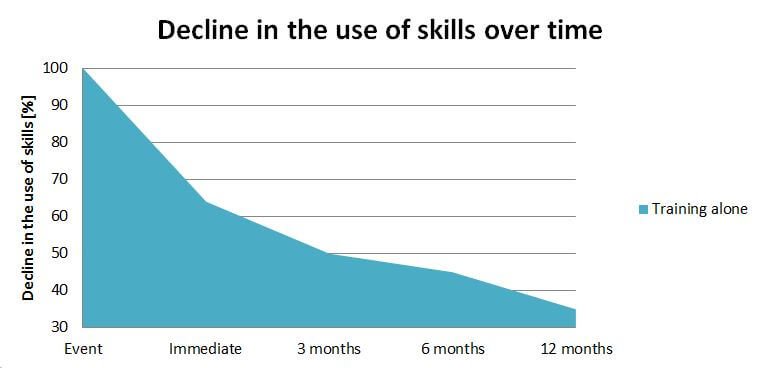
Figure 1: Decline in the use of skill over time (based on Saks and Belcort)
Why Coaching Matters After Training
Training is an excellent first step in developing a new skill; it isn’t the end, but the start of a learning journey. Practice is the hardest part. Finding ways to incorporate the newly learnt skill into one’s work will help the skill strengthen and allow employees to get better at it. The time just after training is the most vulnerable because a person still has to actively work on a skill, and executing it may require a lot of thought. In this phase, we can still easily fall back into old habits or even abandon the skill.
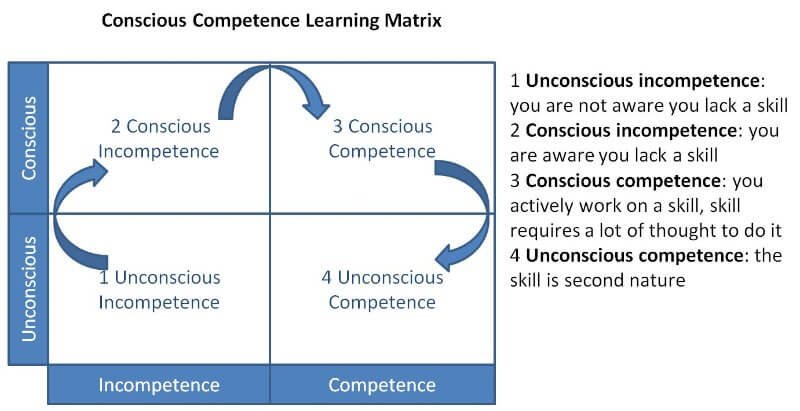
Figure 2: Skill maturity versus skill development overview
The “after the training” phase (the conscious competence phase) is where any post-training follow-up activities (e.g., coaching, reviews, interactive meetings) help sustain the learning. Multiple studies reveal the important role of managers in coaching employees after training. The effectiveness of the training can be increased by 40% if managers take up a coaching role. These activities are necessary if we want to sustain the learning and prevent the “learning dip”. Personally, I think that combining the newly learned skill with practice and coaching, in particular, is the most effective way to get the most out of training. As the old proverb says, “Practice makes perfect”: by doing and even making mistakes, we learn the best. We achieve this when an employee applies a new skill in projects, discusses it with peers, even during a coffee break, dares to challenge the old ways of working, and dares to make mistakes. It is not an easy time as it is definitely outside his/her comfort zone. Coaching sessions offer time for analysis, reflection, and action that ultimately enable a person to take the necessary steps to develop the required skill. This simple graphic (figure 3) illustrates how coaching prevents an employee from falling into the “learning dip”.
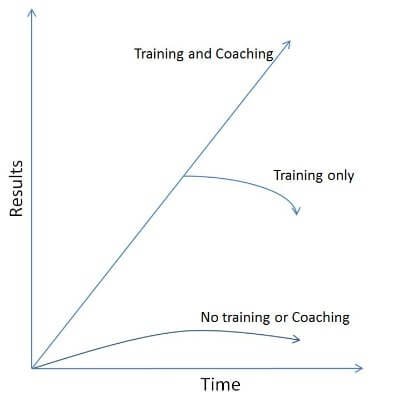
Figure 3: How coaching reinforces training
Conclusion: Making Learning Stick with Coaching
In conclusion, I think that if companies want results from their employee development, they need to ensure that, in addition to the training itself, a series of follow-up activities is in place. Training is just the start of the journey of developing new skills; practicing the skills in the workplace is the hardest part of learning. The follow-up activities, such as coaching, will help employees through the vulnerable phase when executing a new skill requires a lot of thought, and the risk of falling back into old work habits is high. Curious how coaching can reinforce your recent training? Get in touch with us.